

Keywords
How to Cite
Abstract
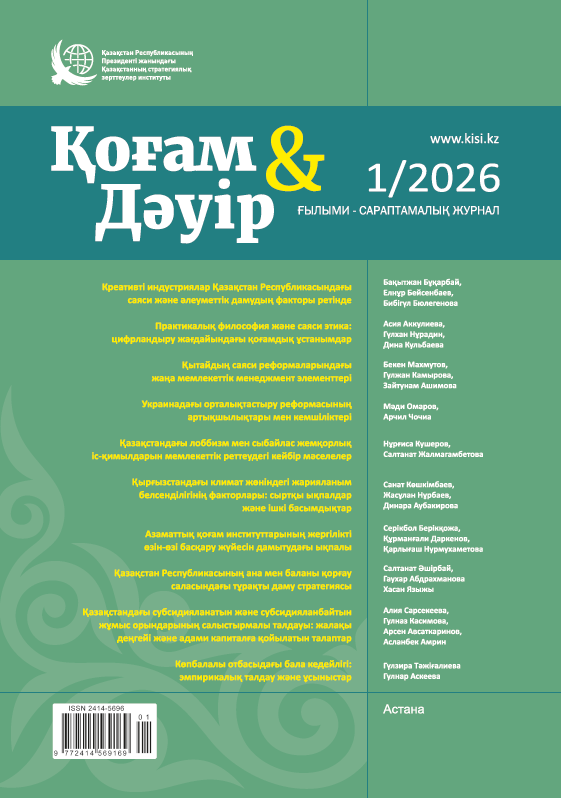
The researchpaper is devoted to a comprehensivepolitical and legalanalysis of the relationship between lobbyingactivitiesand anti-corruptionlegislation.Lobbying is consideredin the modernpoliticalsystemas a mechanism of opendialoguebetweencivilsocietyandgovernmentinconditionsregulated by law.However, ifconductedillegally,uncontrolled, or secretly, itmaypose a risk of corruption.Inthiscontext, the legalregulation of lobbyingactivities in Kazakhstanmaylead to an increase in corruptionrisks.
Thepaperanalyzes the essence of the concept of lobbying, the instruments of legalrestrictionininternationalpractice, the directions of development of anti-corruptionpolicyinKazakhstanand the points of contact between thesetwophenomena.
Thestudyprovedthat the boundariesbetweenlobbyingandcorruptioninKazakhstan are blurredand that theyneed to be clarifiedon a legalbasis. It has beenshownthatcorruptioncan be preventedbylegalizinglobbying,introducingtransparencyandaccountability.At the conclusion of thisscientificwork, a number of proposalsandpracticalmechanismswerepresented. The results of the studycancontribute to strengtheningtrustbetween the stateandsociety,improvinglegalreformsandensuringtransparency of the politicalsystem.