

Keywords
How to Cite
Abstract
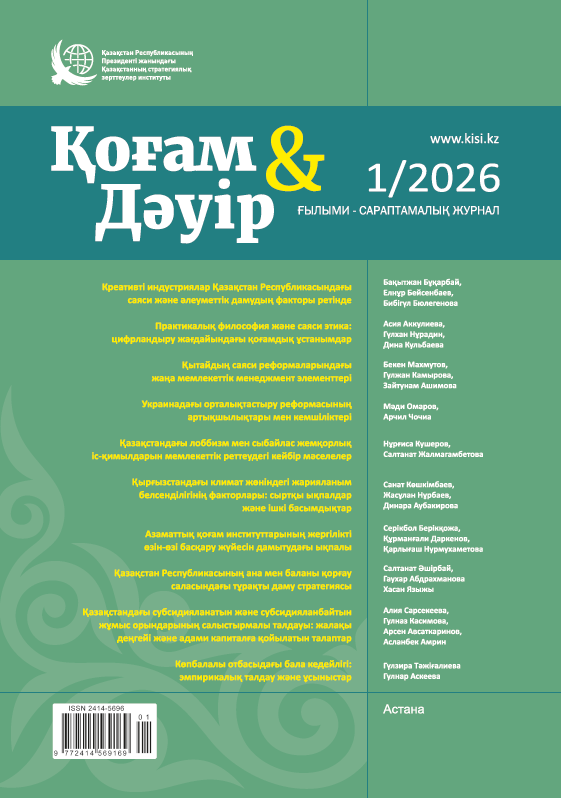
The article examines changes in public attitudes in the context of digitalization from the perspectives of practical philosophy and political ethics. Based on the works of Hannah Arendt, Jürgen Habermas, Michel Foucault, Peter Sloterdijk, Charles Taylor, Zygmunt Bauman, John Searle, Evgeny Morozov, and Lev Manovich, the paper analyzes human freedom and responsibility, power relations, and ethical aspects of digital surveillance in digital society. The authors reveal the causes of modern phenomena such as polarization of public opinion, information chaos, digital panopticism, and digital narcissism. The research emphasizes the necessity of digital ethics and argues the importance of aligning the potential of digital technologies with the principles of humanity and democracy in contemporary society.